
Blogs
Quote for Reflection: Trauma compromises our ability to engage with others by replacing patterns of connection with patterns of protection. ~ Stephen Porges
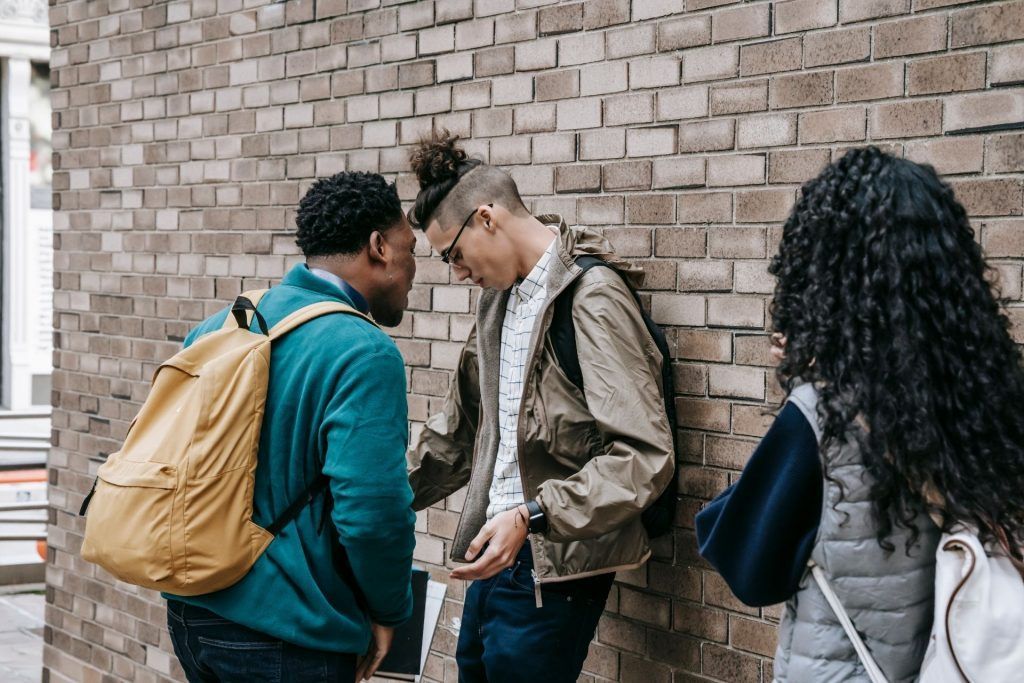
I’m offering everyone who reads this an opportunity to really engage within, connect your minds and hearts together to help create a paradigm shift for yourselves and others. This is in stopping verbal abuse which also includes emotional and psychological trauma. This is about getting real and about self-responsibility.
Trauma responses
With so much going on around how people communicate with each other, from the throngs of cancel culture to politically correctness, it’s important to notice that the majority of these styles are actually trauma responses. We are looking at patterns of control, negation, deceit, deception, minimizing, bullying, and polarization. These can all occur due to trauma from childhood abuse.
Someone disagrees
Ask yourself sincerely, “If someone disagrees with me on a topic I feel impassioned about, what do I really want to get through to them or have them hear in the communication?’
Do I want them:
- To agree with me?
- To just be heard by the other?
- To be heard and agreed with
- To be able to have a civil discourse to exchange ideas?
- To have a great debate like how college or high school kids do by engaging with certain rules and facts?
Really acknowledge your response/s to yourself.
Why do this?
Because there is so much projectile dialogues going on with others through social media and in-person due to what is occurring through the world stage. Many have forgotten to engage with emotional intelligence, and with care and/or kindness towards others or themselves. They get lost in a cause or the emotions, and forget there are humans with feelings at the other end of the conversation.
Questions
Please consider the following questions as well. They help awaken your motives or intentions, so they can be more easily brought to consciousness and worked through. You only have yourself to be honest with. Take your time. Jot down your responses. We are all learning and growing exponentially at this time.
- How were you taught to discuss a situation that was not in agreement with your principles, understanding, or awareness as a child?
- Do you ever use verbal fighting with another directly to resolve issues or to shut down the conversation?
- Do you verbally ‘attack’ another on their character or name call rather than stay with the topic at hand?
- Do you pigeon-hole another when you disagree? (boxing-in like “You always do this?”)
- Do you pull up old unprocessed resentments, grudges and anger with the other to help you feel empowered in the conversation?
- Do you raise your voice/shout at another in order to create a safety net, boundary, or to be heard?
- Do you ever use passive aggression to verbally fight?
- Do you change discourse or skip around to something unrelated in a difficult conversation to create confusion or divert from the topic at hand? Why? What does this do for you?
- Do you feel that you ever want the other to ‘collapse’ or back off so they feel defenseless and will admit they were wrong?
- Do you feel getting even can create a resolution or agreement?
- Do you shut yourself down and avoid telling the other what you’re feeling about the disagreement to keep the peace?
- What do you get out of using these styles in disagreeing?
- Does it depend on the person which style you use (if you use them)?
- Will the strategy to make someone wrong, help you to feel you’re right?
- How will this help you in feeling right? Will you feel redeemed, worthy, more power, or have more value? When did you feel this way in childhood?
- Will another’s admission of being wrong, satisfy what is really going on in what you are wanting or needing? (This could be beneficial or detrimental depending on the motivation or undercurrent…i.e. to have power over another would be a detrimental motivation)
- If you disengage from a verbal disagreement, do you feel like a loser or defeated?
- Do you know the difference between showing another their mistake or error through your own experience rather than making them wrong or bad?
Coping strategies
Just to say that most of the questions come from coping strategies. Many are ways we might be engaging in revengeful or disconnective communication.
In knowing these trauma patterns, I’ve also used all of them myself. It’s been a journey to assess, reassess, and forgive myself. None of us are perfect, but when we have the courage to change, practice, and make these vulnerabilities public, it helps everyone learn, evaluate the motives, and open up space for change in a more authentic way.
These verbal coping patterns also come from the parenting and educational styles that created the trauma. In knowing that our words have frequency and power, how we use our words when we disagree can:
- Support another to see a new possibility
- Open up more emotional intimacy, trust, safety and deeper connection
- Realize that the person is where they are at and allow that to be ok for them while we agree to disagree
- Allow us to see we need a new road away from the relationship, a disconnection, perhaps temporary or permanent
- Vent our feelings in using old coping mechanisms like lack of emotional regulation (which says more about us rather than any message that we want to get through)
Take a pause
Is it possible to instead take a pause, slow down, breathe, and think about what would help you hear another better in the moment? Can you take responsibility for recognizing what is going on for you, your experience, in response to the other’s actions? Can you solicit for help or support to change the dialogue?
A different way to verbalize as an example: “When you raise your voice, it’s hard to stay present for you, because I feel disrespected. Is there another way you can tell me that information so I can really hear what you want to get across or what you need?”
Being responsible for our own triggers or experience keeps us in our core, our body, and helps us to be clear of our goals and motivations in a conversation or any relationship.
Our differences inform us of who we are. We can learn to respond to those differences creatively and respectfully in wanting to see the world evolve very differently. Each one of us is responsible for our part. Each time we practice our verbal skills, they count and matter. It also sends out a different verbal and thought frequency rather than a trauma response, not only to the other, but to the world.
With deep care for all of us!
Judy
- You can read more about how to work on trauma responses and where verbal abuse develops from in Chapters 2 and 5 of Book 1, in “Moving Beyond Revised: Healing the Trauma From Childhood Abuse Through The ThetaHealing® Technique.” https://www.themovingbeyondtraumaproject.org/store
